
In the age of digital ads, viral social media campaigns, and algorithm-driven content, it’s easy to forget that some of the most powerful advertising tools are still bolted into concrete and steel. Urban billboards — those towering, luminous fixtures plastered across city skylines — remain some of the most effective ways to capture consumer attention. But why? What is it about these massive, often garish advertisements that continues to hold our gaze in a world saturated with screens?
The answer lies at the intersection of psychology, urban design, and sheer visual dominance.
Bigger Than Life, Harder to Ignore
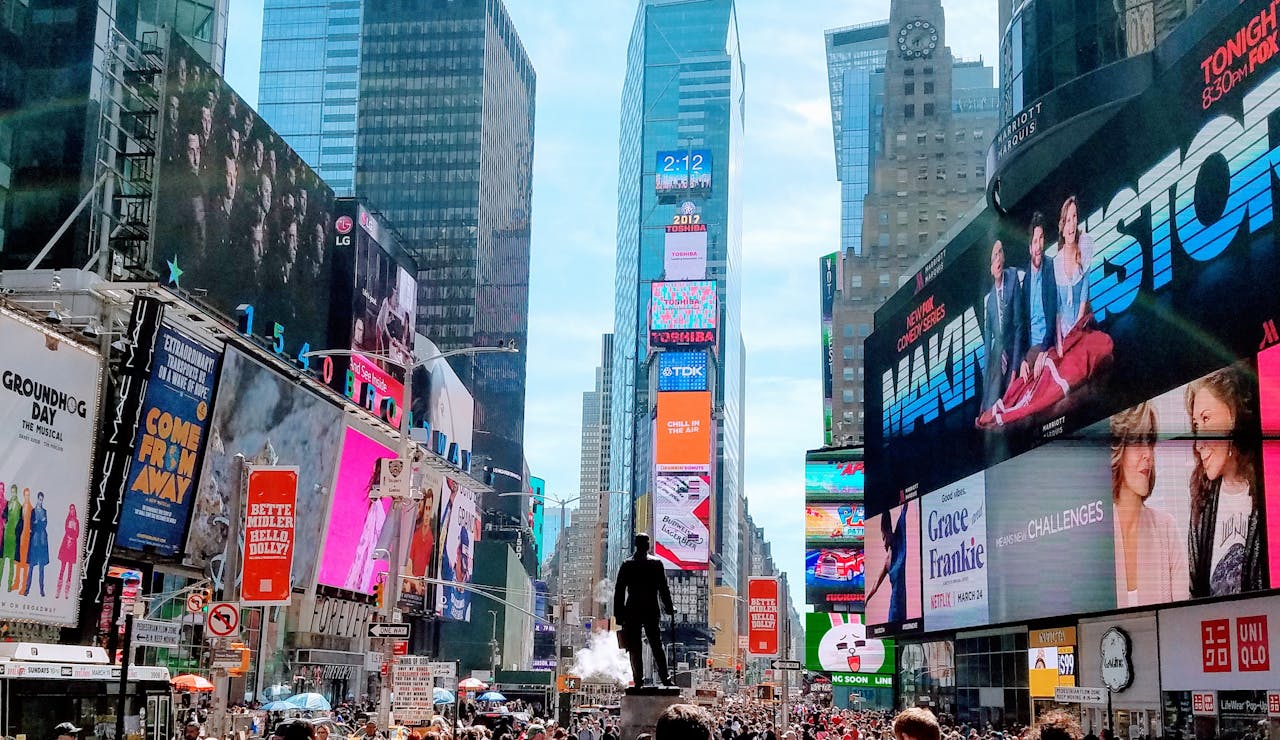
Step into any major city — New York, Tokyo, London, or São Paulo — and you’ll quickly notice how advertising is stitched into the urban fabric. From digital billboards on high-rises to classic vinyl posters hanging over busy intersections, these ads are nearly impossible to miss. Unlike social media ads that can be swiped away or muted, urban billboards demand your attention. You walk under them, drive past them, wait beside them at red lights. They loom above you like sentinels, making subtlety almost irrelevant.
This in-your-face presence taps into a basic principle of human perception: we’re wired to notice what stands out. Large, bright, high-contrast visuals naturally grab our attention, especially when they interrupt the monotony of city infrastructure. A cleverly designed billboard can slice through the sensory overload of urban life with surprising precision.
A Captive Audience on the Move
City life is busy, fast-paced, and often congested. Whether people are stuck in traffic, walking to work, or riding the subway, there’s plenty of downtime — and billboard advertisers know this. In these in-between moments, a commuter’s eyes will wander, and that’s where billboards come in. The audience may be captive, but they’re not passive.
According to a Nielsen report, over 60% of consumers who see a billboard will later search for the product or service advertised. That’s a staggering number for a medium often dismissed as old-school. Unlike banner ads or popups that feel invasive, billboards are just “there,” waiting for the mind to engage with them — and when they do, they often leave a stronger impression.
Iconic by Design
There’s also an aspirational quality to billboard advertising. When a brand lands a spot in Times Square or along the Sunset Strip, it signals success. These high-profile locations are more than advertising platforms; they’re stages. For many companies, especially luxury or tech brands, being seen on a skyline billboard is a badge of honor — it conveys legitimacy, influence, and ambition.
Some billboards have become iconic in their own right. Think Coca-Cola’s long-standing neon presence in London’s Piccadilly Circus or Apple’s sleek product shots that tower over Los Angeles. These aren’t just ads; they’re cultural touchpoints. People take selfies in front of them. They go viral. They become part of the city’s story.
Evolving with Technology
Billboards aren’t just static posters anymore. The integration of LED and digital technology has transformed them into dynamic displays capable of real-time updates, animations, and even interactivity. Advertisers can now tailor messaging by time of day, weather, or local events. A coffee ad might appear at 7 a.m., while a happy hour promo rolls out by 5 p.m.
And then there’s the rise of 3D billboards — a newer trend that’s taking cities by storm. Using optical illusions and curved screens, these billboards appear to break out of their frames, stopping pedestrians in their tracks. A snarling tiger or rotating sneaker seemingly floating above a street corner is hard to scroll past — because you can’t.
Targeting in a Post-Privacy Era
With increasing concerns about data privacy and digital tracking, billboards offer something unique: reach without intrusion. They don’t rely on cookies, pixels, or personal information. Instead, they target locations, not individuals. In this way, billboard advertising sidesteps the ethical dilemmas tied to online tracking, while still offering broad visibility in key demographics. Want to reach young professionals? Place your ad near high-rise apartments and co-working spaces. Trying to attract luxury shoppers? Hit the high-end retail districts.
It’s a back-to-basics approach, and it’s gaining new relevance in a world fatigued by digital overload and surveillance capitalism.
The Psychology of Presence
Urban billboards also benefit from something subtle but incredibly powerful: the psychology of repeated exposure. Known as the “mere exposure effect,” this phenomenon describes how people tend to develop a preference for things simply because they’re familiar. Seeing the same ad every morning during a commute doesn’t just inform — it builds recognition and trust.
Brands understand this. That’s why you’ll often see the same product advertised across multiple billboards in the same district. It’s not redundancy — it’s reinforcement. In the crowded marketplace of consumer goods, being top-of-mind is everything, and presence matters more than perfection.
The Future Still Looks Up
As cities become smarter and more interconnected, the future of billboard advertising will likely evolve further. Augmented reality could allow users to interact with billboards via smartphones. Real-time data could make messaging hyper-responsive — imagine weather-activated fashion ads or traffic-driven promos for ride-shares.
Despite all the innovation happening in digital media, the skyline remains a coveted space for advertisers. And while the platforms may change — from paper to pixels, from static to 3D — the core appeal remains the same: visibility, presence, and impact.
In a world where consumers are trained to skip, block, or scroll away from ads, urban billboards do something extraordinary. They make people look up. And sometimes, that’s all it takes.